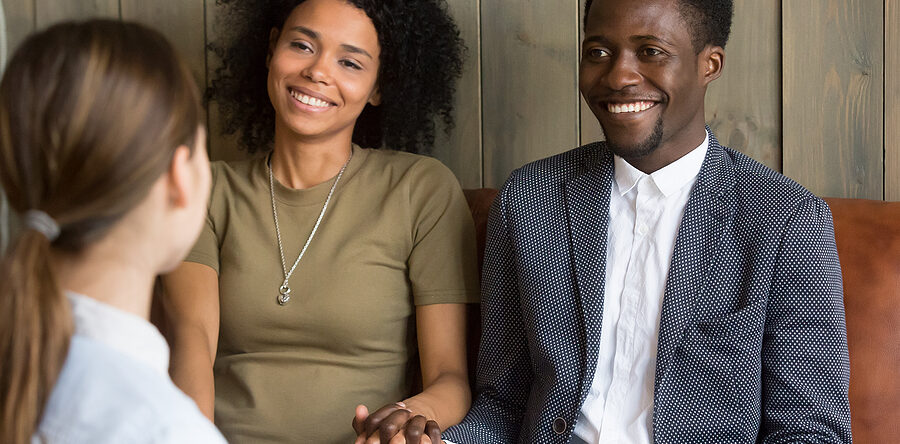
So, what happens during couples counseling?
The image you conjure up may be quite simple. A married couple struggling in their relationship decides to get some help from a therapist. The couple sits down on opposite ends of a comfy sofa and tell the marriage counselor all the things they hate about their spouse. The therapist nods along solemnly then offer helpful advice. Success! They have their answer and walk off into the sunset hand in hand ready to live happily ever after.
There are several issues with this depiction. Marriage is work, and like any work, successful couples counseling requires hard work and effort from all parties involved.
Can couples counseling save your marriage?
Couples counseling today looks a bit different than it did several decades ago. In fact, most approaches to marital counseling had less than 50 percent success rate!
Think of counseling merely as therapists coaching couples on how to be better friends and romantic partners with each other. While you were improving your relationship with your partner, those improvements were not maintained long-term.
Fortunately, newer forms of marriage counseling are showing fantastic results. Emotion-Focused Therapy, also known as EFT, boasts a success rate close to 80%.
Coupled with other factors, couples counseling is helping to reduce America’s divorce rate. Counseling can save your marriage!
Find the Right Counselor
In order to achieve the best results in counseling, whether that be for yourself or with your partner, you should seek a therapist you’ll feel comfortable with. Start by finding someone who you and your partner both like. Naturally, you’ll want to seek out someone who specializes in couple’s therapy.
While the terms therapist and counselor are often used interchangeably, they can also act as umbrella terms. A therapist could be a psychologist, psychiatrist, licensed professional counselor (LPC), licensed clinical social worker (LCSW), or licensed marriage and family therapist (LMFT). Each of these types of therapists go through different education and credentialing processes but are knowledgeable on today’s most successful methods of relationship counseling. Furthermore, many specialize in marital issues such as intimacy problems.
You may want to choose your marital counselor based on other aspects such as gender, sexuality, ethnicity, race, religion, or years of experience in the field. There are online tools like WithTherapy.com that can help you narrow down your search. Ask friends or family members if they know of any marriage counselors that they would recommend. Feel free to interview your therapists over the phone or in person to ensure they will be a good fit for you and your partner.
Session Number One
You and your partner should discuss anything you want to address in counseling prior to your first appointment. When you meet with the couple’s counselor of your choosing, they may have you fill out paperwork. They may also take time to verbally explain their policies and run you through the legalities and ethics involved with your therapist and patient relationship. After that is taken care of, you both can focus on spending the remainder of the session talking through what led you to seek couple counseling.
There are many reasons you and your partner may decide to consult a couple’s counselor. Some couples even decide to go to therapy before getting married! Couples that take part in premarital counseling have the opportunity to strengthen their relationship before marriage. They learn helpful communication skills and discover new ways to handle disagreements without hurting one another.
Other couples may not be as lucky and look to counseling to resolve serious issues within their marriage. Affairs, growing apart, poor communication, arguments, money troubles, or intimacy problems are just some of the reasons you may seek counseling. However, even healthy couples can go to therapy to better themselves and their relationship.
Meet the Counselor
During your first few sessions, your marriage counselor will perform what is known as an intake. They will ask you and your partner questions about your past. They may ask about both of your childhoods, how you met, your early marriage years, about your families, or any other pertinent information regarding your individual lives. While this may seem tedious, it’s important to remember that your therapist needs to know your whole story. They can then use that information to help you two as a couple more effectively.
Opening up to someone about the inner-workings of your relationship can be difficult. However, remember that you’re in a safe space! Be open and honest with your counselor. If you need to scream, yell, or cry, do it. Your therapist is there to help you, but they’ll also allow you to be you.
Both you and your partner will take turns talking, and your therapist will listen. They pay close attention to what you say, as well as your body language and reactions to one another.
Goal Setting
Towards the end of these first few sessions, you and your partner will determine what you hope to get out of couples counseling. Be honest with each other and yourselves about your goals. Maybe you want your partner to be more affectionate. Maybe your partner wants you to practice empathy. Perhaps you want to learn how to move on after your partner cheated. There are no wrong answers! As long as you and your partner can communicate your goals and obstacles to your relationship, you’re on the right track.
Your next step is to set a timeline. How many sessions do you think it will take to meet your goals? Similar to goals, there is no set time amount. Some couples see results after only three sessions with their counselor. Other couples may meet for weeks or even months.
Attend your therapy sessions
Just as there is no specific time frame for marriage counseling, there is no set agenda for your counseling sessions. Some sessions will be spent with you and your partner and your counselor together. However, some sessions will be individual counseling.
It’s normal for your marriage counselor to spend your first few sessions with you both separately. Individual counseling can allow you to share things with your therapist that you may not feel comfortable discussing with your partner in the room. Your counselor can also use individual sessions to encourage you to work on your faults and improve upon your strengths.
If you have children or another family member who has been affected by your relationship issues, you may want to ask your counselor about family counseling. Relationship problems can cause chaos throughout your entire family. A child may act out for attention because they’re feeling neglected due to the disagreement between their parents. Family counseling can help improve not only your relationship with your partner but also relationships with your children.
Like any relationship, marriage can bring up feelings and situations you both haven’t dealt with before. Together you will learn new skills to improve your relationship and your overall health.
What you’ll Learn
From learning how to communicate with your partner about your feelings to better ways to cope with stress. There is always something to learn from couple’s counseling.
Types of Couples Counseling
Emotionally focused therapy, also known as EFT works with couples in a more productive manner. EFT focuses on emotion as the basis of a person’s relationship needs. Using EFT, your therapist can help you and your partner build emotional awareness, compassion, and acceptance of one another. During your time in couples therapy, EFT can help strengthen your emotional bond and promote a secure attachment.
The Gottman Method is derived from years of research. Using a thorough assessment during your first session, your therapist can use the Gottman Method to guide you and your partner through counseling. There are three main areas your therapist will focus on when working with you using the Gottman Method. These include your relationship as friends, how you handle conflict, and creating shared meaning.
Potential Barrier to Couples Counseling Success
Even with high success rates, there’s always a chance that couples therapy won’t help you and your partner. In therapy, you may come to the realization that your relationship is never going to work. If you come to that conclusion, there’s nothing wrong with that! A good counselor can help you separate as friends and minimize the damage your divorce may cause your children.
Another roadblock you may face in couples counseling is if your partner is unwilling to go. If you’re reading this and your significant other is refusing to attend counseling, ask them the following questions.
Do you want to discuss the benefits of going to therapy?
What type of mental health professional do you want to see? (Private practice or community-based, gender, ethnicity, social worker or LMFT)
When and where would you like to schedule your first session? (Make sure to make it convenient for them)
Are you willing to check out any therapist websites or read an eBook about couples counseling?
Tell your partner you believe couples counseling can positively affect your relationship. Let them know you want to better your relationship with them and that counseling can help.
Call Odyssey Counseling Today
Statistics show that couples wait about six years before they seek couples counseling. Some people believe that if they ignore the problem, it will fix itself. Others are afraid that proposing couples counseling is looked by them as admitting that their relationship is failing. The reality is, you should go to counseling as soon as you know you have a problem. Better yet, go when you perceive or think you may have a problem and learn healthy ways to deal with them!
The counselors at Odyssey Counseling specialize in couples counseling among many other therapy services. Don’t wait any longer. Pick up the phone and call us today at 505-315-7397 to make your in-office or teletherapy appointment.





 Listen In