Parents naturally want to protect their children from emotional pain, but some experiences can leave lasting effects that are difficult for a child or teenager to process on their own. A frightening accident, the loss of a loved one, abuse, bullying, family conflict, medical trauma, or another overwhelming experience can sometimes continue affecting a young person's thoughts, emotions, behavior, and sense of safety long after the event has passed.
Children often don't have the words to explain what they're feeling. Instead, emotional distress may appear through changes in behavior, difficulty sleeping, anxiety, withdrawal, irritability, declining school performance, or physical complaints such as headaches or stomachaches. Teenagers may become more isolated, struggle with depression, engage in risky behaviors, or experience intense emotional reactions that seem difficult to understand.
One evidence-based treatment that has helped many children, teenagers, and adults recover from traumatic experiences is Eye Movement Desensitization and Reprocessing (EMDR) therapy. While many people associate EMDR with adults who have post-traumatic stress disorder (PTSD), the therapy can also be highly effective for younger clients when it is carefully adapted to their developmental stage.
Unlike traditional talk therapy, EMDR does not always require children to describe traumatic memories in great detail. Instead, it helps the brain process difficult experiences in a way that reduces emotional distress while supporting healthier coping and emotional regulation. For younger children, therapists often incorporate creative techniques such as storytelling, drawing, imaginative play, puppets, sand trays, or gentle forms of bilateral stimulation to make the process feel safe, engaging, and appropriate for their age.
At Odyssey Counseling, compassionate, evidence-based care is tailored to each individual. EMDR is one of several therapeutic approaches used to help children, adolescents, and families work through trauma, anxiety, and emotional challenges in a supportive, client-centered environment. Individualized treatment planning and matching clients with the right therapist are central to the practice's philosophy of long-term healing and emotional wellness.
In this article, you'll learn how EMDR therapy works for children and teenagers, how therapists adapt it for different developmental stages, what conditions it may help treat, and what parents can expect if they are considering EMDR for their child.
What Is EMDR Therapy?
Eye Movement Desensitization and Reprocessing, commonly known as EMDR, is a structured psychotherapy approach developed to help people process traumatic or distressing memories that continue to affect their emotional well-being.
When someone experiences an overwhelming event, the brain may have difficulty fully processing what happened. Instead of becoming part of a normal memory, the experience can remain "stuck," causing future situations, sights, sounds, emotions, or thoughts to trigger intense reactions long after the danger has passed.
EMDR helps the brain reprocess these memories so they become less emotionally overwhelming.
During treatment, a therapist guides the client through specific phases while using bilateral stimulation, which may involve:
- Guided eye movements
- Gentle alternating taps
- Alternating sounds through headphones
- Other therapist-directed bilateral techniques appropriate for the client's age
Over time, many individuals find that distressing memories lose much of their emotional intensity. While they may still remember what happened, those memories often become less disruptive to everyday life.
EMDR has been researched extensively and is recognized as an evidence-based treatment for trauma. It is also used to help address concerns such as anxiety, panic, grief, and certain stress-related conditions when clinically appropriate. Treatment plans are always individualized, and EMDR may be used alongside other therapeutic approaches depending on the client's needs.
Can Children and Teenagers Benefit from EMDR?
Yes. Although EMDR was originally developed for adults, decades of clinical experience and research have shown that it can also benefit many children and adolescents when delivered by a therapist trained to work with younger populations.
Children experience trauma differently than adults. Their brains, emotional regulation skills, communication abilities, and understanding of the world are still developing. Because of this, therapy must be adapted to match their developmental level rather than expecting them to participate in treatment as an adult would.
EMDR may be considered for children or teenagers experiencing challenges related to:
- Traumatic events
- Anxiety disorders
- PTSD
- Bullying
- Grief and loss
- Medical procedures or hospitalizations
- Motor vehicle accidents
- Domestic violence exposure
- Family conflict
- Divorce or separation
- Natural disasters
- Community violence
- Attachment-related concerns
- Performance anxiety
- Other distressing life experiences
Not every child who experiences a difficult event will require EMDR, and not every young person is immediately ready for trauma-focused therapy. A qualified mental health professional first evaluates the child's history, symptoms, emotional readiness, coping skills, support system, and treatment goals before determining whether EMDR is an appropriate option.
At Odyssey Counseling, treatment is individualized rather than one-size-fits-all. The multidisciplinary team utilizes evidence-based therapies, including EMDR, trauma-informed care, Cognitive Behavioral Therapy (CBT), mindfulness-based techniques, family systems approaches, and other interventions based on each client's unique needs and stage of development.
How Childhood Trauma Affects the Brain and Emotional Development
Trauma can influence far more than a child's memories.
Because children's brains are still developing, overwhelming experiences may affect how they interpret the world, regulate emotions, build relationships, and respond to stress.
Some children become hypervigilant, constantly scanning for danger even in safe situations. Others may withdraw emotionally, avoid reminders of difficult experiences, or become unusually irritable or fearful.
Depending on the child, trauma may contribute to:
- Difficulty concentrating
- Trouble sleeping
- Nightmares
- Separation anxiety
- Emotional outbursts
- Aggressive behavior
- Low self-esteem
- School difficulties
- Social withdrawal
- Physical symptoms without a clear medical cause
- Persistent worry or fear
Teenagers may experience these effects differently.
Older adolescents sometimes cope by:
- Isolating themselves
- Becoming emotionally numb
- Taking unnecessary risks
- Struggling academically
- Developing depression or anxiety
- Using unhealthy coping strategies
Without appropriate support, unresolved trauma can continue affecting emotional health into adulthood.
The encouraging news is that children's brains remain highly adaptable. With compassionate, evidence-based treatment and strong family support, many young people develop healthier ways to process difficult experiences, regulate emotions, strengthen relationships, and build resilience.
Why EMDR Is Adapted for Different Ages
One of the reasons EMDR has been successfully used with children and teenagers is that therapists recognize development matters.
A five-year-old, a ten-year-old, and sixteen-year-old process emotions very differently. Their language skills, attention spans, ability to understand abstract concepts, and coping abilities continue to mature throughout childhood and adolescence.
For that reason, EMDR is never delivered exactly the same way to every client.
Instead, therapists adapt treatment based on factors such as:
- Age
- Developmental stage
- Emotional maturity
- Communication style
- Trauma history
- Family involvement
- Attention span
- Individual strengths and interests
For younger children, therapy often relies on creative, play-based approaches because play is a child's natural language. Rather than expecting a young child to describe complex emotions verbally, therapists may use toys, puppets, drawing, storytelling, sand trays, or imaginative activities to help children safely express experiences and feelings.
As children grow older, sessions gradually incorporate more direct conversation while still using developmentally appropriate techniques. Teenagers often participate more similarly to adults but may still benefit from visual tools, grounding exercises, and collaborative activities that make therapy feel engaging and relevant to their stage of life.
Throughout every age group, the therapist's priority is creating a safe, trusting relationship where the child or teenager feels supported rather than overwhelmed. EMDR is not about forcing someone to relive painful experiences. Instead, it is a carefully structured process that helps the brain gradually process distressing memories in a way that supports healing, emotional resilience, and long-term well-being
How EMDR Therapy Is Adapted for Young Children
One of the biggest differences between EMDR therapy for adults and EMDR therapy for young children is how therapy is delivered.
Adults can usually describe thoughts, emotions, and memories in detail. Young children, however, often communicate through play, imagination, movement, art, and behavior rather than words. Because of this, therapists adapt EMDR to match a child's developmental level instead of expecting the child to participate in therapy like an adult.
The goal of EMDR remains the same—to help the brain process distressing experiences in a healthier way—but the methods used are carefully tailored to help children feel safe, understood, and engaged throughout the process.
Play Is a Child's Natural Language
Young children often express feelings through play long before they can explain them verbally.
Rather than asking a child to sit and discuss painful memories, an EMDR therapist may incorporate activities that feel more familiar and less intimidating.
Depending on the child's age and comfort level, sessions may include:
- Imaginative play
- Dolls or action figures
- Puppets
- Storytelling
- Drawing and coloring
- Building with blocks
- Sand tray activities
- Stuffed animals
- Games designed to encourage emotional expression
These activities allow children to communicate experiences and emotions in ways that feel natural, helping therapists understand how the child is processing difficult events.
Storytelling Helps Children Process Difficult Experiences
Children often understand the world through stories.
Instead of asking direct questions about a traumatic event, a therapist may encourage a child to create a story about a fictional character who encounters similar feelings or challenges.
For example, a child who experienced a frightening accident might tell a story about a scared puppy learning to feel safe again.
This indirect approach allows children to explore difficult emotions without feeling overwhelmed. As trust develops, many children gradually become more comfortable discussing their own experiences.
Drawing and Creative Expression
Art can provide another important outlet for children who struggle to explain their emotions.
A therapist might invite a child to:
- Draw a safe place
- Illustrate different emotions
- Create pictures representing memories
- Draw family members
- Use colors to describe feelings
These creative activities give therapists valuable insight while helping children externalize emotions that may otherwise feel confusing or overwhelming.
Gentle Bilateral Stimulation for Children
Bilateral stimulation is one of the defining features of EMDR therapy.
While adults often use guided eye movements, younger children may benefit from other developmentally appropriate methods that feel more comfortable and engaging.
Depending on the child's needs, a therapist may use:
- Gentle alternating taps on the hands or knees (with appropriate consent)
- Tactile "buzzers" that alternate vibrations between hands
- Alternating sounds through headphones
- Tracking a moving object with the eyes
- Bilateral movements incorporated into games or activities
The specific method is always selected based on the child's age, comfort level, developmental abilities, and clinical needs.
The emphasis is never on forcing participation. Instead, therapists continually monitor how the child is responding and adjust treatment accordingly.
How EMDR Is Adapted for Teenagers
Teenagers often participate in EMDR somewhat differently than younger children.
Because adolescents generally have stronger communication skills and greater emotional awareness, therapy frequently includes more direct discussion of thoughts, emotions, relationships, and life experiences.
However, teenagers are still developing emotionally, neurologically, and socially.
Therapists recognize that adolescents face unique challenges, including:
- Identity development
- Academic pressure
- Peer relationships
- Social media influences
- Bullying
- Family conflict
- Athletic or performance expectations
- Dating relationships
- Preparing for adulthood
These developmental factors influence how EMDR sessions are structured.
Rather than taking a one-size-fits-all approach, therapists collaborate with teenagers to create treatment plans that respect their growing independence while providing appropriate emotional support.
Building Trust Matters
Teenagers are often more willing to participate in therapy when they feel respected and involved in the process.
An EMDR therapist typically spends time developing a strong therapeutic relationship before addressing traumatic memories.
This may include:
- Explaining how EMDR works
- Answering questions honestly
- Discussing treatment goals together
- Teaching coping skills
- Creating emotional safety
- Identifying personal strengths
Building trust allows teenagers to feel more comfortable engaging in treatment while maintaining an appropriate sense of control throughout the process.
Parents Play an Important Role
Parents and caregivers are often essential partners in a child's healing journey.
Although therapy remains confidential in ways that support the child's trust and therapeutic relationship, parents frequently participate in treatment planning and learn strategies for supporting progress at home.
Depending on the child's age and individual needs, parents may help by:
- Providing developmental history
- Describing behavioral changes
- Identifying emotional triggers
- Reinforcing coping skills
- Maintaining consistent routines
- Encouraging healthy communication
- Celebrating progress
- Creating a safe and supportive home environment
For younger children, parent involvement may be especially important because caregivers help children practice emotional regulation between therapy sessions.
Family-centered care is one of many evidence-based approaches that supports long-term emotional wellness. Odyssey Counseling provides individual counseling, family counseling, trauma therapy, and EMDR as part of individualized treatment plans designed to meet each client's unique needs while involving families whenever clinically appropriate.
What Conditions Can EMDR Help Treat Children and Teenagers?
Although EMDR is widely recognized for treating trauma and post-traumatic stress disorder (PTSD), trained clinicians may incorporate it into treatment plans for a variety of concerns when it is clinically appropriate.
Potential conditions include:
- Childhood trauma
- PTSD
- Anxiety disorders
- Panic symptoms
- Grief and loss
- Bullying-related distress
- Medical trauma
- Motor vehicle accidents
- Natural disasters
- Witnessing violence
- Separation anxiety
- Phobias
- Low self-esteem related to traumatic experiences
- Adjustment difficulties following major life changes
Because every child is different, EMDR is never automatically recommended based solely on a diagnosis.
Instead, therapists complete a comprehensive assessment to determine whether the child has the emotional readiness, coping skills, support system, and treatment goals necessary for EMDR to be both safe and beneficial.
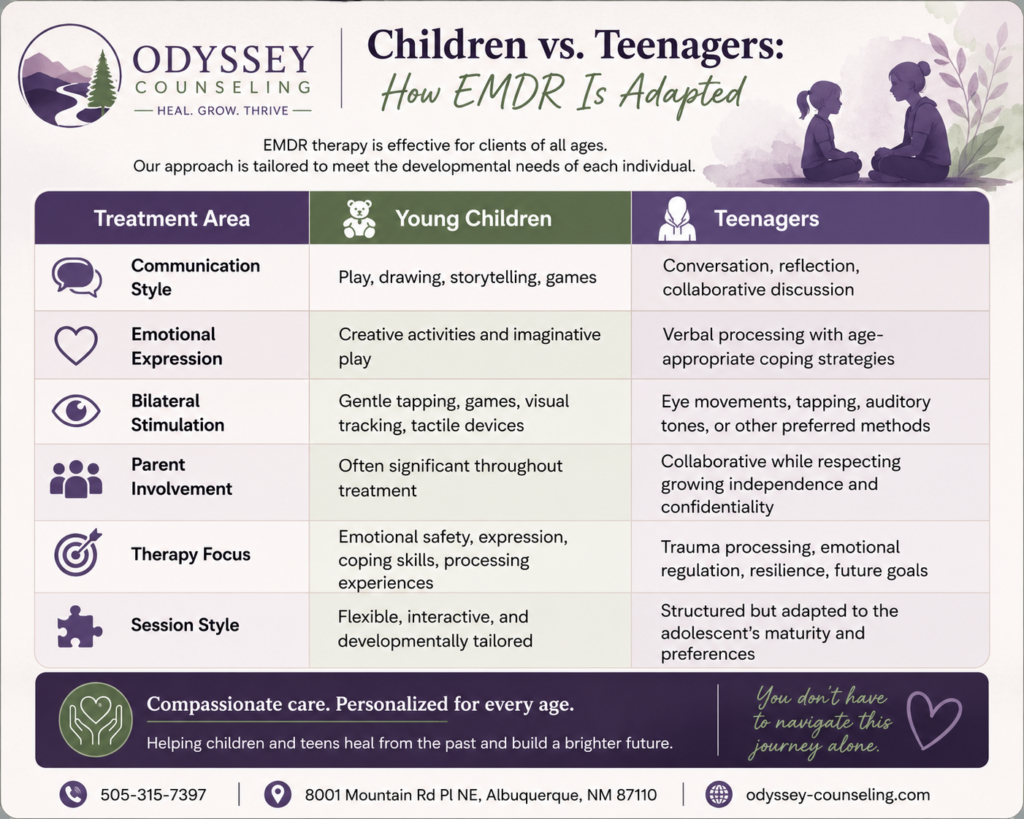
While the techniques may differ, the purpose remains the same: helping children and teenagers process distressing experiences in a healthier way so those memories no longer have the same emotional impact on daily life.
What Happens During an EMDR Session for a Child or Teen?
One of the most common concerns parents have is whether EMDR therapy requires their child to repeatedly relive traumatic experiences.
The answer is no.
While every child's experience is unique, EMDR therapy is designed to help young people process distressing memories in a gradual, structured, and supportive manner. Therapists work at a pace that feels manageable for the child or teenager, continually monitoring their comfort level throughout treatment.
For many children, the first several sessions don't focus on traumatic memories at all. Instead, the therapist spends time building trust, understanding the child's experiences, teaching coping skills, and ensuring they feel emotionally safe before beginning trauma processing.
Treatment is individualized, meaning no two EMDR treatment plans look exactly alike.
At Odyssey Counseling, evidence-based care begins with a comprehensive assessment and an individualized treatment plan that reflects each client's age, developmental stage, emotional needs, family circumstances, and therapeutic goals.
The First Appointment
The initial sessions generally focus on learning about the child rather than immediately discussing traumatic memories.
A therapist may gather information about:
- The child's developmental history
- Current emotional concerns
- Family relationships
- School experiences
- Medical history
- Previous counseling
- Coping skills
- Sources of support
- Specific events contributing to emotional distress
Parents or caregivers often participate in portions of these early appointments to provide background information and discuss concerns while helping establish treatment goals.
Building Emotional Safety Before Trauma Processing
One of the strengths of EMDR therapy is that preparation comes before trauma processing.
Children first learn skills that help them manage difficult emotions during and between sessions.
These skills may include:
- Deep breathing
- Grounding exercises
- Relaxation techniques
- Mindfulness activities
- Identifying safe people
- Creating a "safe place" visualization
- Emotional regulation strategies
- Recognizing physical signs of stress
Developing these coping tools helps children feel more confident before beginning work with distressing memories.
Trauma Processing Happens Gradually
Once a child demonstrates readiness, the therapist carefully begins trauma processing using developmentally appropriate techniques.
Depending on the child's age, this may involve:
- Storytelling
- Drawing
- Play activities
- Guided imagery
- Gentle bilateral stimulation
- Talking about specific memories when appropriate
The therapist continuously monitors the child's emotional responses and adjusts the pace whenever necessary.
Children are never expected to "push through" overwhelming emotions.
Instead, therapy emphasizes emotional safety while gradually helping the brain process memories that previously felt frightening or overwhelming.
The Eight Phases of EMDR Explained in Parent-Friendly Language
Parents often hear that EMDR follows an "eight-phase protocol."
Although this sounds technical, the phases simply provide a structured framework that helps therapists deliver treatment safely and consistently.
Phase 1: History Taking
The therapist learns about the child's experiences, current concerns, family situation, strengths, and treatment goals.
This information helps determine whether EMDR is appropriate and identifies which experiences may eventually become treatment targets.
Phase 2: Preparation
Before processing trauma, children learn coping strategies that help them feel calm and emotionally regulated.
The therapist also explains EMDR using age-appropriate language so children understand what to expect.
Phase 3: Assessment
Together, the therapist and child identify a specific memory or situation to work on while exploring the thoughts, feelings, and physical sensations connected to it.
For younger children, this process may occur through play, storytelling, or artwork instead of detailed verbal discussion.
Phase 4: Desensitization
Using bilateral stimulation, the child gradually processes the targeted memory while the therapist carefully monitors emotional responses.
Many children begin noticing that memories feel less upsetting over time.
Phase 5: Installation
The therapist helps strengthen healthier beliefs that replace negative thoughts connected to the traumatic experience.
For example:
Instead of:
"I am not safe."
The child may gradually develop a healthier belief such as:
"I am safe now."
Or instead of:
"It was my fault."
The healthier belief may become:
"It wasn't my fault."
Phase 6: Body Scan
Children learn to notice whether any uncomfortable physical sensations remain connected to the memory.
If needed, additional processing continues until the memory feels less emotionally and physically distressing.
Phase 7: Closure
Every session ends by helping the child return to a calm, emotionally regulated state.
This may include:
- Relaxation exercises
- Safe place visualization
- Breathing techniques
- Positive coping strategies
Children leave each appointment with tools they can continue using between sessions.
Phase 8: Reevaluation
At the beginning of future appointments, the therapist reviews progress and determines whether additional processing is needed or whether new treatment goals have emerged.
Is EMDR Safe for Children?
When provided by a qualified mental health professional trained in EMDR and child development, EMDR is generally considered a safe and evidence-based treatment option for many children and adolescents.
Safety begins long before trauma processing starts.
Qualified therapists carefully evaluate:
- Developmental readiness
- Emotional stability
- Family support
- Current stressors
- Coping abilities
- Medical and mental health history
- Treatment goals
EMDR is not rushed.
If a child needs additional time to develop coping skills or emotional regulation before beginning trauma processing, therapists prioritize preparation rather than moving ahead too quickly.
Parents sometimes worry that discussing traumatic experiences will make symptoms worse.
Although children may temporarily experience strong emotions while processing difficult memories, therapists are trained to pace treatment carefully and help children remain emotionally supported throughout the process.
The objective is not to increase distress—it is to reduce the long-term emotional impact of traumatic experiences.
How Long Does EMDR Therapy Usually Take?
One of the most common questions parents ask is how many EMDR sessions their child will need.
There is no universal answer because every child enters therapy with different experiences, strengths, and goals.
Several factors influence treatment length, including:
- The child's age
- Type of trauma experienced
- Number of traumatic experiences
- Severity of symptoms
- Family support
- Emotional regulation skills
- Overall treatment goals
- Participation in other therapies
Some children experiencing a single traumatic event may make meaningful progress in fewer sessions, while others with more complex trauma histories may benefit from longer-term treatment.
Rather than focusing on completing therapy within a certain number of sessions, therapists emphasize meaningful, lasting progress at a pace that supports healthy emotional development.
Signs Your Child May Benefit from EMDR Therapy
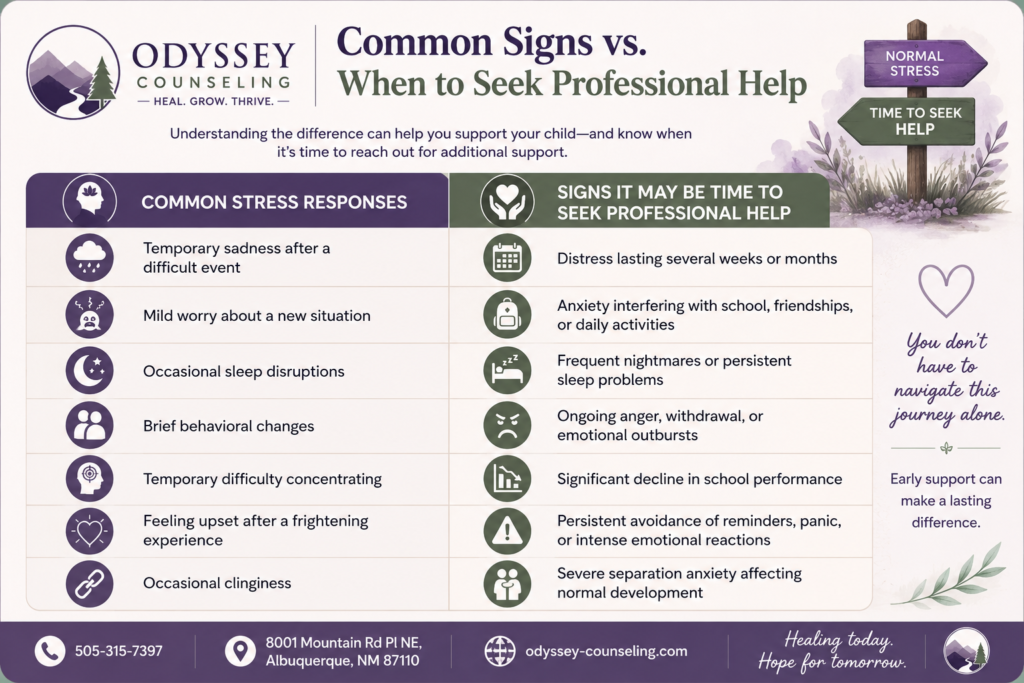
Parents often wonder whether their child's behaviors are temporary reactions to stress or signs that professional support could be helpful.
Although only a licensed mental health professional can determine whether EMDR is appropriate, some behaviors may indicate that additional evaluation is worthwhile.
Possible signs include:
- Persistent anxiety
- Frequent nightmares
- Difficulty sleeping
- Increased irritability
- Emotional outbursts
- Avoiding certain places or people
- Sudden fears
- Withdrawal from family or friends
- Declining school performance
- Trouble concentrating
- Persistent sadness
- Physical complaints without a medical explanation
- Strong emotional reactions after a traumatic event
These symptoms do not automatically mean a child needs EMDR.
However, if emotional or behavioral changes continue interfering with everyday life, seeking an evaluation from a qualified behavioral health professional can help families better understand available treatment options.
Parents know their children better than anyone else.
If something doesn't seem quite right, seeking guidance early can often provide reassurance, education, and access to evidence-based treatment options before emotional challenges become more difficult to manage. Odyssey Counseling offers compassionate, individualized behavioral health services for children, teenagers, adults, couples, and families throughout Albuquerque and Central New Mexico, helping clients build resilience and long-term emotional wellness through evidence-based care.
Frequently Asked Questions
Is EMDR therapy safe for children?
Yes. When provided by a qualified mental health professional with specialized training in EMDR and child development, EMDR is generally considered a safe, evidence-based treatment for many children and adolescents. Before beginning trauma processing, therapists carefully assess a child's developmental readiness, emotional stability, coping skills, and support system to determine whether EMDR is appropriate.
At what age can a child begin EMDR therapy?
There is no single minimum age because readiness depends on the individual child rather than a specific birthday. Some younger children can successfully participate in developmentally adapted EMDR using play, storytelling, drawing, and other creative approaches. A qualified therapist evaluates each child's developmental level, communication abilities, and emotional needs before recommending treatment.
Does my child have to talk about every detail of the trauma?
Not necessarily. One reason many families appreciate EMDR is that children do not always have to describe traumatic experiences in extensive detail. Therapists use age-appropriate methods that help children process memories without requiring lengthy verbal discussions. The focus is on helping the brain heal rather than repeatedly retelling painful experiences.
How many EMDR sessions will my child need?
The number of sessions varies depending on factors such as the child's age, symptoms, history, treatment goals, and the complexity of the experiences being addressed. Some children make meaningful progress after relatively few sessions, while others with more complex trauma histories benefit from longer-term treatment. Therapy is individualized rather than based on a fixed schedule.
Can EMDR help children with anxiety as well as trauma?
Yes. Although EMDR is widely known for treating trauma and PTSD, it may also help some children experiencing anxiety, panic symptoms, phobias, grief, and other distressing experiences when clinically appropriate. A mental health professional will determine whether EMDR is the best treatment option based on the child's specific circumstances.
Will parents be involved in therapy?
In many cases, yes. Parents and caregivers often participate in the assessment process, treatment planning, and ongoing support at home. While therapists also respect age-appropriate confidentiality—particularly for teenagers—family involvement can play an important role in helping children practice coping skills, maintain healthy routines, and reinforce progress between sessions.
Can teenagers benefit from EMDR differently than younger children?
Yes. Teenagers generally participate in therapy with more direct discussion than younger children, while still receiving developmentally appropriate support. Therapists adapt EMDR to address issues that commonly affect adolescents, such as academic stress, peer relationships, bullying, identity development, family conflict, and anxiety about the future.
Is EMDR only used for severe trauma?
No. EMDR may be considered for a variety of distressing experiences, not just severe trauma. Depending on the individual's needs, therapists may use EMDR to address grief, anxiety, bullying, medical procedures, accidents, or other emotionally overwhelming events. A comprehensive evaluation helps determine whether EMDR is appropriate.
How do I know if my child may benefit from professional counseling?
If emotional or behavioral changes persist, interfere with school, relationships, family life, or daily functioning, or if your child seems unable to recover after a distressing event, scheduling an evaluation with a qualified mental health professional is a good first step. Early support can help families better understand available treatment options and begin building healthy coping skills.
Conclusion
Watching your child struggle with anxiety, trauma, grief, or overwhelming emotions can leave parents feeling uncertain about how best to help. Fortunately, children and teenagers are remarkably resilient, especially when they receive compassionate, evidence-based support that recognizes their unique developmental needs.
EMDR therapy offers an innovative approach to helping many young people process difficult experiences without requiring them to repeatedly relive painful memories. Through carefully adapted techniques such as play, storytelling, creative expression, and developmentally appropriate bilateral stimulation, therapists help children and adolescents process distressing experiences in ways that feel safe, manageable, and supportive.
Every child heals differently. Some may benefit from EMDR, while others may require different therapeutic approaches or a combination of evidence-based treatments. What matters most is receiving an individualized evaluation from experienced mental health professionals who understand child development, trauma, and emotional wellness.
At Odyssey Counseling, healing begins by meeting each child and family where they are. Through personalized treatment planning, compassionate care, and evidence-based therapies such as EMDR, the practice is committed to helping children, teenagers, and families throughout Albuquerque and Central New Mexico build resilience, strengthen emotional well-being, and move toward lasting hope and recovery.
Begin Your Child's Healing Journey with Odyssey Counseling
If your child or teenager is struggling with trauma, anxiety, grief, or emotional challenges, you don't have to navigate the journey alone.
The compassionate team at Odyssey Counseling provides individualized, evidence-based care designed to meet children and adolescents where they are. Whether EMDR therapy, trauma-informed counseling, family counseling, or another therapeutic approach is the right fit, experienced professionals will work closely with your family to develop a personalized treatment plan that supports healing and long-term emotional wellness.
Serving Albuquerque, Rio Rancho, Corrales, Placitas, Bernalillo, Los Ranchos, and communities throughout Central New Mexico, Odyssey Counseling is committed to helping children, teenagers, and families build resilience and discover hope.
Contact Odyssey Counseling today to schedule a confidential consultation and learn whether EMDR therapy may be an appropriate option for your child or teenager.



 Listen In