
If you've recently completed an Eye Movement Desensitization and Reprocessing (EMDR) therapy session and now feel unusually tired, emotional, mentally foggy, or are experiencing vivid dreams, you are not alone.
Many people search online for phrases like "EMDR hangover," "Why am I so tired after EMDR?" or "Is it normal to feel worse after EMDR therapy?" because they are surprised by how different they feel after a trauma-processing session.
The first thing to know is that "EMDR hangover" is not an official medical diagnosis or clinical term. Instead, it is an informal expression that many clients—and even some therapists—use to describe the temporary emotional, mental, and physical reactions that can occur after an EMDR processing session.
For some people, these effects may last only a few hours. Others may notice changes for a day or two, while some continue processing memories and emotions for several days after treatment. Everyone's nervous system and healing journey are unique, so there is no single "normal" experience.
Although these temporary reactions can feel unsettling, they are often a sign that your brain is continuing the work that began during your therapy session. Just as your body needs time to recover after physical exercise, your brain sometimes needs time to organize, process, and integrate difficult memories after EMDR therapy.
That doesn't mean every uncomfortable feeling should simply be ignored. Understanding what is expected, knowing how to care for yourself after therapy, and recognizing when it's appropriate to contact your therapist are all important parts of the healing process.
At Odyssey Counseling, EMDR therapy is one of several evidence-based approaches used to help individuals recover from trauma, PTSD, anxiety, and other distressing life experiences. Every treatment plan is individualized to each client's goals, symptoms, and readiness, ensuring therapy progresses at a pace that supports long-term emotional wellness rather than rushing the healing process.
In this article, you'll learn:
- What do people mean by an "EMDR hangover"
- Why temporary side effects sometimes occur after EMDR
- Common emotional, mental, and physical symptoms
- How long these reactions typically last
- Self-care strategies that may help after a session
- When you should contact your therapist
- Why these experiences often become part of meaningful long-term healing
What Is an EMDR Hangover?
The phrase "EMDR hangover" has become increasingly common among people who have completed EMDR therapy sessions.
Although it may sound alarming at first, the term simply describes a collection of temporary reactions that can occur while the brain continues processing traumatic or distressing memories after therapy.
Unlike a traditional hangover caused by alcohol, an EMDR hangover has nothing to do with dehydration or toxins.
Instead, it reflects the fact that your brain and nervous system have been actively working through memories, emotions, physical sensations, and beliefs that may have been stored for months—or even years.
Many clients describe feeling:
- Physically exhausted
- Emotionally sensitive
- More tearful than usual
- Mentally "foggy"
- Deeply reflective
- More aware of emotions
- Less emotionally numb
- Surprisingly calm after emotional release
Others experience:
- Vivid dreams
- Changes in sleep
- Temporary headaches
- Muscle tension
- Mild anxiety
- Emotional ups and downs
- Increased memories surfacing between sessions
Importantly, not everyone experiences these reactions.
Some individuals leave an EMDR session feeling energized, relieved, lighter, or emotionally peaceful. Others notice almost no side effects at all.
There is no "correct" response.
Every nervous system processes information differently.
One person's brain may complete much of its processing during the therapy appointment itself, while another person's brain continues organizing and integrating information over the next several days.
Because healing is highly individualized, comparing your experience with someone else's can create unnecessary worry.
Your therapist will help you understand what is typical for your specific situation while monitoring your progress throughout treatment.
Why It Happens After EMDR Therapy
To understand why an EMDR hangover sometimes occurs, it helps to understand what EMDR is designed to accomplish.
EMDR is an evidence-based psychotherapy approach that helps people process distressing memories that have become "stuck" in the brain.
Rather than simply talking about a traumatic experience, EMDR helps the brain reprocess memories so they become less emotionally overwhelming over time.
Researchers believe that bilateral stimulation—such as guided eye movements, tapping, or alternating sounds—helps activate the brain's natural information-processing system while clients recall distressing memories in a safe, structured therapeutic environment.
Instead of remaining frozen in their original emotional intensity, traumatic memories gradually become integrated with healthier thoughts, emotions, and perspectives.
This process does not stop the moment your therapy session ends.
For many people, the brain continues organizing, sorting, and integrating information after leaving the counseling office.
That ongoing work is one reason some clients notice temporary changes between appointments.
You might suddenly remember details you had forgotten.
You may recognize new connections between past experiences and current behaviors.
Some individuals notice shifts in long-held beliefs about themselves.
Others experience dreams that seem unusually vivid or emotionally meaningful.
These experiences do not necessarily mean something is wrong.
In many cases, they simply reflect the brain continuing the adaptive information processing that EMDR is intended to promote.
Think of it this way:
If you begin renovating a house, the work doesn't stop the moment the contractors leave for the day.
The project continues until everything has been repaired, organized, and rebuilt.
Similarly, after an EMDR session, your brain may continue "organizing the construction site" by integrating difficult experiences into healthier emotional networks.
That process naturally requires energy.
Just as physical exercise can leave muscles feeling tired while they recover and grow stronger, emotional processing can temporarily leave the mind and body feeling fatigued while healing continues.
At Odyssey Counseling, therapists help clients understand that healing is rarely a straight line. Individualized treatment planning, evidence-based therapies, and ongoing communication allow the counseling process to move at a pace that supports both safety and meaningful long-term recovery.
Is an EMDR Hangover Normal?
For many individuals, yes—temporary emotional or physical reactions after an EMDR processing session can be a normal part of therapy.
That does not mean every client will experience an EMDR hangover.
Some people notice very few changes after treatment.
Others experience mild fatigue for the remainder of the day.
Still others may notice emotional sensitivity, vivid dreams, or increased awareness of thoughts and feelings over the next several days.
All of these experiences can fall within the normal range of responses depending on the individual, the memories being processed, and where someone is in their overall treatment journey.
It is also important to remember that therapy is intentionally individualized.
Your therapist carefully monitors your responses throughout treatment and adjusts pacing according to your needs, emotional regulation skills, and overall readiness.
If sessions feel emotionally intense, that does not automatically mean therapy is progressing too quickly.
Likewise, if you experience little or no reaction afterward, that does not mean EMDR isn't working.
Healing does not look the same for everyone.
One of the most reassuring things clients can do is maintain open communication with their therapist about what they are experiencing between appointments.
Sharing changes in mood, sleep, dreams, physical sensations, or emotional reactions gives your therapist valuable information that can help guide future sessions and ensure treatment remains supportive and effective.
Rather than viewing temporary discomfort as a setback, many clients eventually recognize these experiences as signs that meaningful healing is taking place. With compassionate guidance, evidence-based care, and a strong therapeutic relationship, temporary post-session reactions often become one small part of a much larger journey toward resilience, emotional wellness, and lasting recovery.
Common EMDR Hangover Symptoms
One of the reasons the phrase "EMDR hangover" has become so common is that people often experience temporary changes after therapy that they weren't expecting.
You may leave your appointment feeling calm and optimistic, only to become unusually tired later that day. Others notice they become more emotional than usual, have vivid dreams that night, or find themselves thinking about memories they had not considered in years.
Although these experiences can feel surprising, they are often part of the brain's ongoing processing after an EMDR session.
It's important to remember that every person experiences EMDR differently.
Some clients experience only one or two mild symptoms.
Others experience several temporary reactions.
Many people experience none at all.
There is no "right" or "wrong" way for your brain to respond.
Fatigue and Physical Exhaustion
The most commonly reported symptom is simple exhaustion.
Many clients describe feeling:
- Physically tired
- Mentally drained
- Sleepy during the afternoon
- Ready for bed earlier than usual
- Less energetic for a day or two
Although EMDR is not physically demanding in the traditional sense, trauma processing requires significant emotional and cognitive work.
Many people compare the experience to taking an important exam or spending hours engaged in deep emotional conversations.
Your brain has been actively processing difficult memories, emotions, beliefs, and body sensations.
Just as muscles may feel tired after strenuous exercise, your nervous system may need additional rest after intensive emotional work.
Increased Emotional Sensitivity
Some individuals notice they become more emotionally sensitive after EMDR.
You may find yourself:
- Crying more easily
- Feeling emotionally vulnerable
- Becoming more compassionate toward yourself
- Feeling sadness that was previously difficult to access
- Feeling unexpected relief
These emotional shifts do not necessarily indicate something has gone wrong.
In many cases, they reflect the brain allowing previously suppressed emotions to be processed in healthier ways.
Vivid Dreams
Dreams are another commonly discussed experience.
Some clients report:
- More vivid dreams
- More frequent dreams
- Dreams involving people from the past
- Symbolic dreams
- Dreams that seem emotionally meaningful
Others experience no noticeable changes in sleep or dreaming.
Researchers do not fully understand why dreams sometimes increase after EMDR, but many therapists believe they may reflect the brain continuing to organize memories during sleep.
Temporary Mental Fog
Some people describe feeling mentally "foggy" after treatment.
Examples include:
- Difficulty concentrating
- Feeling distracted
- Slower thinking
- Forgetfulness
- Reduced mental energy
This temporary cognitive fatigue usually improves as the nervous system recovers.
Many clients find it helpful to avoid scheduling mentally demanding activities immediately following an EMDR session whenever possible.
Memories Surfacing Between Sessions
It is not unusual for additional memories to emerge after therapy.
You may suddenly remember:
- Childhood experiences
- Conversations
- Images
- Emotions
- Physical sensations
- Connections between life events
This does not necessarily mean new trauma is developing.
Rather, your brain may simply be continuing to organize information that had previously been disconnected or stored differently.
These memories often become valuable discussion points during your next counseling appointment.
Heightened Body Awareness
Trauma is not stored only as thoughts or memories.
Many people also notice temporary physical sensations after EMDR, including:
- Muscle tension
- Mild headaches
- Heaviness
- Restlessness
- Increased awareness of breathing
- Temporary stomach discomfort
These sensations are generally temporary and often lessen as emotional processing continues.
If physical symptoms become severe, persist unexpectedly, or concern you, it is always appropriate to discuss them with your therapist or healthcare provider.
Feeling Better Than Expected
One often-overlooked possibility is feeling significantly better after EMDR.
Some clients report:
- Feeling lighter
- Greater emotional peace
- Reduced anxiety
- Improved sleep
- Less emotional reactivity
- Increased optimism
These positive changes can occur immediately or develop gradually over multiple sessions.
Every healing journey is unique.
How Long Do EMDR Side Effects Usually Last?
One of the most common questions clients ask is:
"How long is this going to last?"
The honest answer is that there is no universal timeline.
Most temporary post-session reactions improve within 24 to 72 hours, although some people recover more quickly while others continue noticing subtle emotional processing for several days.
The length of an EMDR hangover depends on many individual factors, including:
- The complexity of the memories processed
- Current stress levels
- Sleep quality
- Physical health
- Emotional resilience
- Previous trauma history
- The stage of treatment
- Individual nervous system differences
Some people feel completely back to normal by the following morning.
Others notice small emotional shifts throughout the week before their next therapy appointment.
Neither experience is automatically more successful than the other.
Healing occurs differently for every person.
Immediately After the Session
Right after therapy, many people feel:
- Calm
- Relaxed
- Emotionally tired
- Reflective
- Mentally quiet
Others may feel emotionally energized because they have experienced relief after discussing difficult memories.
The First 24 Hours
The first day is often when clients notice the greatest changes.
You may experience:
- Fatigue
- Increased emotional awareness
- Mild mental fog
- Emotional release
- Desire for additional rest
Many therapists encourage clients to avoid overscheduling themselves immediately after EMDR appointments whenever possible.
Between 24 and 72 Hours
As the brain continues processing information, clients sometimes notice:
- Additional insights
- New memories
- Emotional shifts
- Improved perspective
- Reduced distress regarding previously upsetting memories
Many people report gradual improvement during this period.
One Week Later
By the following therapy appointment, many temporary symptoms have significantly improved or resolved.
Your therapist will review:
- Changes you noticed
- New memories
- Emotional reactions
- Dreams
- Progress toward treatment goals
This discussion helps guide future EMDR sessions and ensures therapy continues moving at an appropriate pace.
Why Everyone's Recovery Looks Different
One of the most reassuring things to remember is that there is no "standard" EMDR recovery experience.
Every person's brain processes information differently because every person's life experiences are different.
Several factors influence recovery.
Trauma History
Someone processing a single traumatic event may experience different reactions than someone working through years of complex trauma.
Neither experience is more "correct."
They simply reflect different treatment journeys.
Current Life Stress
Your brain does not process therapy in isolation.
Current work demands, family responsibilities, financial concerns, medical conditions, sleep quality, and everyday stress all influence how much energy your nervous system has available for recovery.
Emotional Regulation Skills
Clients who have already developed strong grounding skills, mindfulness practices, breathing techniques, and healthy coping strategies may find it easier to manage temporary emotional changes between sessions.
These skills are often developed before intensive trauma processing begins.
Session Content
Not every EMDR session involves the same level of emotional intensity.
Some appointments focus on:
- Preparation
- Resource development
- Coping skills
- Treatment planning
Others involve deeper trauma processing that naturally requires more emotional energy afterward.
Individual Nervous System Differences
Every nervous system responds differently to stress and healing.
Some people recover quickly.
Others need more time to integrate new experiences.
Neither pattern indicates that therapy is working better or worse.
It simply reflects the remarkable individuality of human healing.
At Odyssey Counseling, therapists recognize that successful trauma recovery is never based on comparing one person's progress with another's. Individualized treatment planning allows therapy to move at a pace that supports each client's unique experiences, emotional readiness, and long-term wellness goals. Evidence-based care is combined with compassionate support throughout every stage of treatment.
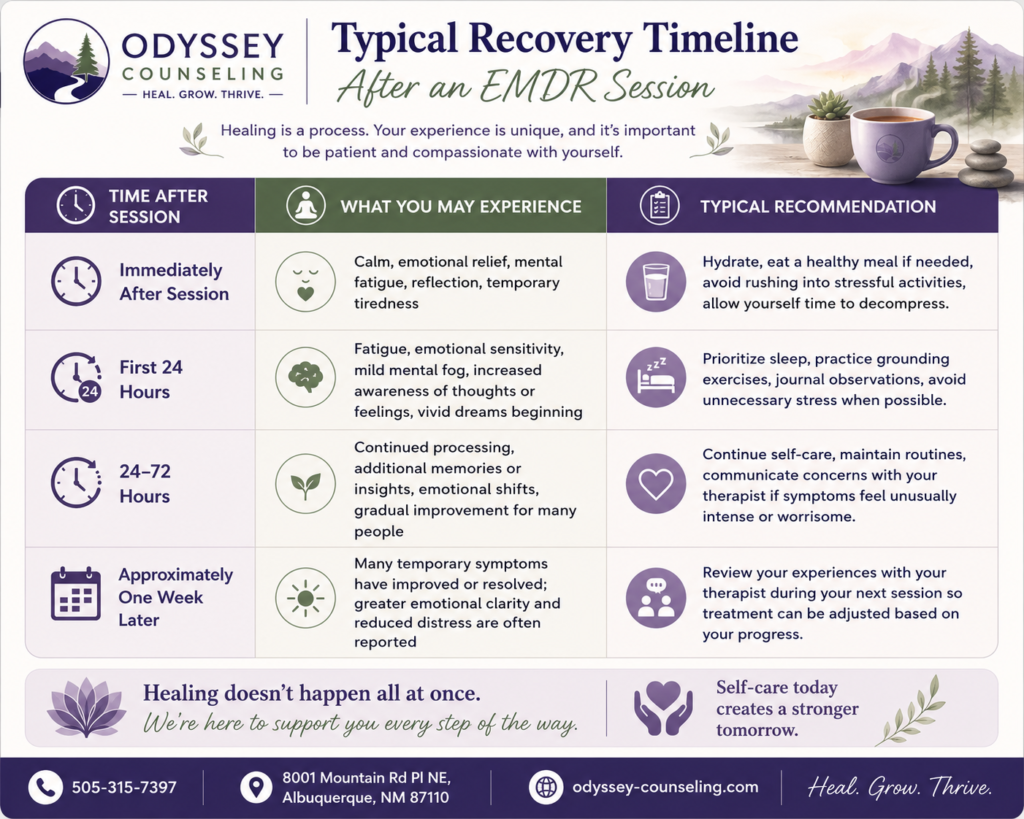
Although this timeline reflects many clients' experiences, there is no universal schedule for emotional healing. Some individuals notice very few post-session reactions, while others continue processing for several days. The goal is not to recover within a certain number of hours but to allow your brain and nervous system the time they need to heal safely and effectively.
Self-Care After an EMDR Session
One of the most helpful things you can do after an EMDR session is to recognize that your work may not end when you leave the counseling office.
Although the structured therapy session has concluded, your brain may continue organizing memories, emotions, thoughts, and physical sensations as part of the natural healing process. Giving yourself permission to slow down and practice intentional self-care can make this period more comfortable while supporting your overall recovery.
Self-care does not mean trying to "fix" your emotions or force yourself to feel differently. Instead, it means creating an environment where your mind and body have the opportunity to recover from the emotional work that has taken place.
Prioritize Rest
Fatigue is one of the most commonly reported temporary reactions after EMDR.
If you feel unusually tired, listen to your body.
You may benefit from:
- Going to bed earlier
- Taking a short nap if needed
- Reducing unnecessary evening commitments
- Allowing yourself quiet time after your appointment
Rest is not a sign of weakness. Emotional processing requires energy, and your nervous system may simply need additional time to recover.
Stay Hydrated and Eat Nutritious Meals
Stress and emotional processing can sometimes make people forget basic self-care.
Try to:
- Drink plenty of water throughout the day.
- Eat balanced meals.
- Avoid skipping meals because you are emotionally distracted.
- Choose foods that provide steady energy rather than excessive sugar or caffeine.
Supporting your physical health also supports your emotional recovery.
Practice Grounding Techniques
Grounding exercises can help you remain connected to the present if emotions become temporarily more noticeable after therapy.
Examples include:
- Deep breathing
- Progressive muscle relaxation
- Mindfulness exercises
- Paying attention to sights, sounds, and physical sensations around you
- Holding a comforting object
- Walking outdoors
Many clients find grounding especially helpful if they notice temporary anxiety or emotional sensitivity between sessions.
Journal Your Experiences
Some therapists encourage clients to keep a journal after EMDR sessions.
Writing down your experiences may help you notice:
- New memories
- Emotional shifts
- Dreams
- Personal insights
- Questions for your next appointment
- Situations that trigger unexpected emotions
You do not need to analyze everything that appears.
Simply recording your observations can provide valuable information for future therapy sessions.
Be Gentle With Yourself
Many people become frustrated when they feel emotional after therapy.
Instead of criticizing yourself for being tired or emotional, try viewing these experiences with curiosity and self-compassion.
Healing is rarely a perfectly straight path.
Some days may feel easier than others.
Progress often occurs gradually rather than all at once.
Giving yourself permission to experience emotions without judgment is often part of the healing process itself.
Continue Your Normal Routine—When Appropriate
Although additional rest can be helpful, many people also benefit from maintaining healthy daily routines.
This may include:
- Light exercise
- Walking
- Gentle stretching
- Spending time with supportive family members
- Reading
- Listening to calming music
- Maintaining healthy sleep routines
Returning to everyday life while allowing space for recovery often supports emotional stability.
At Odyssey Counseling, therapists work collaboratively with clients to develop individualized coping strategies that fit each person's treatment plan, emotional needs, and overall wellness goals. Self-care recommendations are tailored to the individual rather than using a one-size-fits-all approach.
What You Should Avoid After Processing Sessions
Just as certain activities may support recovery, others may temporarily make emotional processing more difficult.
Every person's circumstances are different, but many therapists recommend approaching the first day or two after an intensive EMDR session with extra care.
Avoid Overscheduling Yourself
If possible, avoid filling the remainder of your day with multiple stressful commitments.
Back-to-back meetings, emotionally demanding conversations, or major responsibilities may leave little opportunity for your nervous system to recover.
If your schedule allows, consider leaving yourself some quiet time after your appointment.
Avoid Major Life Decisions
If you are feeling emotionally overwhelmed immediately after processing a difficult memory, it may be wise to postpone significant decisions until your emotions have settled.
Examples include:
- Ending relationships
- Making major financial decisions
- Quitting a job
- Relocating
- Other significant life changes
Waiting a short period allows you to evaluate important decisions with greater clarity.
Limit Alcohol and Recreational Drug Use
Some people attempt to numb difficult emotions after therapy.
However, alcohol and recreational drugs may interfere with emotional processing while making it more difficult to recognize how you are genuinely feeling.
If substance use is part of your treatment history, maintaining your recovery plan is especially important.
Don't Judge Your Progress Too Quickly
One of the biggest mistakes people make is assuming that temporary discomfort means therapy is not working.
Healing is often uneven.
A difficult day after EMDR does not necessarily indicate a setback.
Likewise, feeling wonderful after one session does not mean the entire healing process is complete.
Your therapist will help interpret your experiences within the broader context of your treatment plan.
Avoid Comparing Yourself to Others
Online forums and social media contain countless stories about EMDR experiences.
While reading about others can sometimes be reassuring, every person's trauma history, nervous system, and treatment plan are unique.
Comparing yourself to someone else's timeline may create unnecessary anxiety.
Focus instead on your own progress and maintain open communication with your therapist.
When to Contact Your Therapist
Although temporary emotional and physical reactions are often expected after EMDR, there are times when reaching out to your therapist is appropriate.
Remember:
You are never bothering your therapist by asking questions about your recovery.
Therapists expect clients to have questions between sessions, particularly when beginning EMDR.
Contact Your Therapist If You Experience:
- Emotional distress that feels unusually intense or frightening
- Symptoms lasting significantly longer than expected without improvement
- Difficulty functioning in daily life
- Persistent inability to sleep
- Severe anxiety that continues escalating
- New concerns that you do not understand
- Questions about your treatment plan
- Uncertainty about whether your reactions are typical
Your therapist may simply reassure you that your experiences are expected, recommend additional grounding techniques, or adjust future sessions based on your response.
Open communication helps therapy remain individualized and supportive.
Seek Immediate Emergency Help If:
EMDR therapy should never replace emergency mental health care.
Seek immediate emergency assistance or contact appropriate crisis resources if you experience:
- Thoughts of harming yourself
- Thoughts of harming someone else
- Feeling unable to remain safe
- A mental health emergency requiring immediate intervention
Emergency situations require immediate evaluation rather than waiting for your next counseling appointment.
Odyssey Counseling emphasizes client safety, individualized care, ethical treatment, trauma-informed practices, and appropriate referrals whenever a higher level of care is needed. Clients experiencing life-threatening mental health emergencies should seek emergency services or crisis resources immediately.
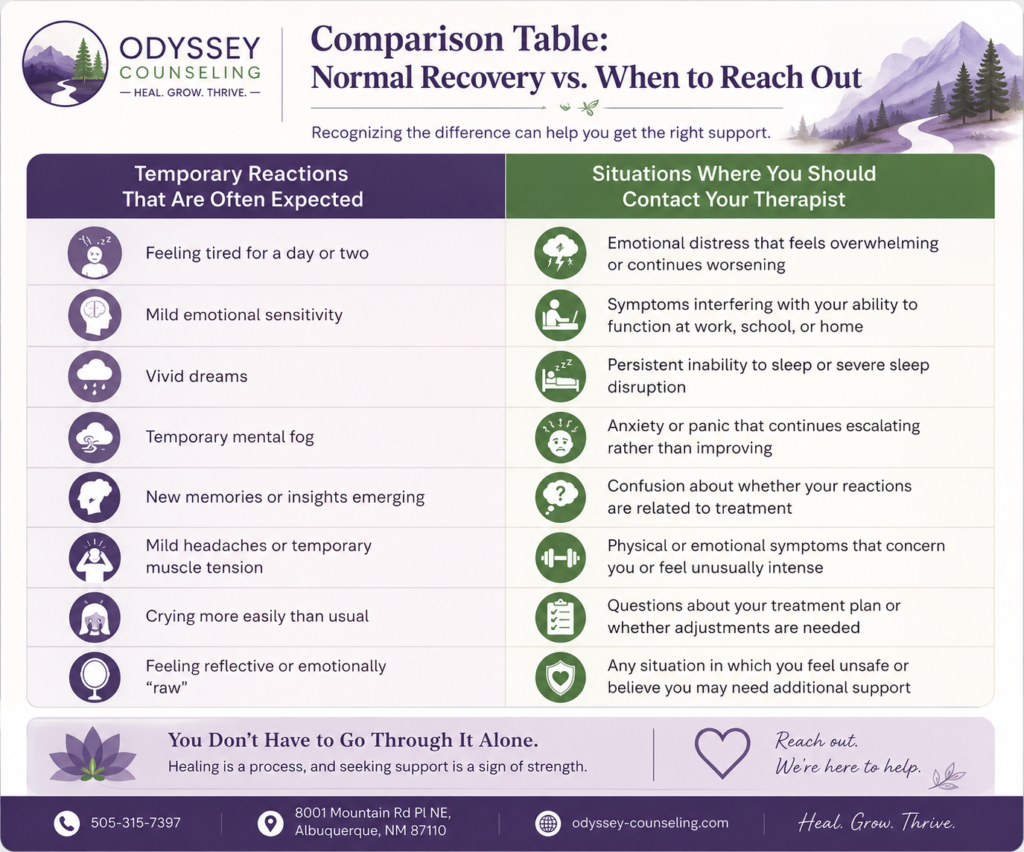
Most people find that temporary post-session reactions gradually improve with rest, self-care, and ongoing communication with their therapist. The purpose of this table is not to encourage unnecessary worry but to help you distinguish between experiences that often occur during healing and situations where additional guidance may be beneficial.
One of the greatest strengths of EMDR therapy is that it is not something you have to navigate alone. Your therapist remains an active partner throughout your treatment, helping you understand your experiences, answer questions, and adjust therapy as needed so your healing journey continues safely, compassionately, and at a pace that supports lasting emotional wellness.
Frequently Asked Questions
What is an EMDR hangover?
An EMDR hangover is an informal, non-clinical term used to describe the temporary emotional, mental, or physical reactions that some people experience after an Eye Movement Desensitization and Reprocessing (EMDR) therapy session. Common experiences may include fatigue, emotional sensitivity, vivid dreams, temporary mental fog, or increased awareness of emotions. These reactions often improve within a few hours to several days, although everyone's experience is unique.
Is it normal to feel exhausted after EMDR?
Yes. Feeling physically or mentally tired after an EMDR processing session is one of the most commonly reported temporary reactions. Trauma processing requires significant emotional and cognitive energy, and your brain may continue organizing memories after your appointment. Getting adequate rest, staying hydrated, and allowing yourself time to recover often helps.
Why do I have vivid dreams after EMDR?
Some people notice more vivid or emotionally meaningful dreams after EMDR therapy because the brain may continue processing memories during sleep. Dreams can be one way the mind integrates emotional experiences. However, not everyone experiences changes in dreaming, and vivid dreams do not necessarily indicate a problem with treatment.
How long do EMDR side effects usually last?
For many people, temporary reactions improve within 24 to 72 hours, although some individuals recover more quickly while others continue noticing subtle emotional processing for several days. The timeline varies depending on factors such as the type of memories being processed, current stress levels, overall health, and each person's unique nervous system.
Should I be worried if I cry after EMDR?
Not necessarily. Crying can be a normal emotional response as previously suppressed feelings are safely processed during therapy. Many clients find that emotional release becomes part of healing. If your emotions feel unusually intense, continue worsening, or interfere with daily functioning, discuss your experience with your therapist.
Can EMDR make anxiety temporarily worse?
Some individuals notice temporary increases in emotional awareness or anxiety while their brain continues processing distressing memories. These reactions are often short-lived and may improve as treatment progresses. Your therapist can help determine whether your experience falls within the expected range and can adjust future sessions if needed.
What can I do to recover after an EMDR session?
Helpful self-care strategies include:
- Prioritizing rest
- Staying hydrated
- Eating nutritious meals
- Practicing grounding exercises
- Journaling your thoughts or dreams
- Limiting unnecessary stress
- Maintaining healthy routines
- Communicating openly with your therapist about your experiences
These practices support emotional recovery while allowing your nervous system time to continue healing.
When should I call my therapist after EMDR?
Contact your therapist if you experience emotional distress that feels overwhelming, symptoms that continue worsening instead of improving, persistent difficulty functioning, severe sleep disruption, or questions about your treatment. If you ever experience thoughts of harming yourself or others, or another mental health emergency, seek immediate emergency assistance or contact appropriate crisis resources.
Conclusion
Beginning EMDR therapy is often a significant step toward healing from trauma, anxiety, PTSD, and other distressing life experiences. While many people have heard about the benefits of EMDR, fewer realize that temporary emotional or physical reactions may occur after a processing session.
An EMDR hangover—a term commonly used by clients to describe temporary fatigue, emotional sensitivity, vivid dreams, or mental fog—is often a normal part of the brain continuing its work after therapy. Although these experiences can feel unexpected, they frequently improve with time, rest, self-care, and ongoing communication with your therapist.
At the same time, every healing journey is different.
Some people notice almost no side effects after EMDR.
Others experience temporary emotional changes that last a few days.
Neither experience determines how successful therapy will ultimately be.
What matters most is maintaining honest communication with your therapist, practicing healthy coping strategies between sessions, and trusting the individualized treatment process developed specifically for you.
Healing from trauma rarely follows a perfectly straight line. There may be days that feel emotionally challenging and others that bring unexpected relief, new understanding, or renewed hope. With compassionate guidance, evidence-based care, and patience, many people find that the difficult memories that once felt overwhelming gradually lose their emotional intensity, making room for greater resilience, confidence, and long-term emotional wellness.
At Odyssey Counseling, healing is viewed as a collaborative journey built on trust, individualized treatment planning, and compassionate support. Whether EMDR becomes part of your treatment or another evidence-based approach better fits your needs, the goal remains the same: helping you move toward lasting recovery, healthier relationships, and a more hopeful future.
Begin Your Healing Journey with Odyssey Counseling
If you've recently started EMDR therapy, are considering trauma treatment, or have questions about emotional reactions after counseling sessions, you don't have to navigate the process alone.
At Odyssey Counseling, our compassionate team understands that healing looks different for every individual. We provide personalized, evidence-based care designed to meet you where you are while helping you build resilience, process difficult experiences safely, and move toward long-term emotional wellness.
Whether you're seeking help for trauma, PTSD, anxiety, grief, life transitions, or other behavioral health concerns, we're here to answer your questions and help you determine whether EMDR therapy or another therapeutic approach is the right fit for your unique needs.
We proudly serve clients throughout Albuquerque, Rio Rancho, Corrales, Placitas, Los Ranchos de Albuquerque, Bernalillo, Los Lunas, Belen, Edgewood, Tijeras, and surrounding Central New Mexico communities.
Take the first step toward healing today. Contact Odyssey Counseling to schedule a confidential appointment and learn how compassionate, individualized counseling can help you move forward with hope and confidence.



 Listen In