If you've been researching trauma therapy, you've probably come across Eye Movement Desensitization and Reprocessing (EMDR) therapy. Perhaps a friend recommended it after overcoming post-traumatic stress disorder (PTSD), or maybe your therapist mentioned it as a possible treatment option. Either way, one question naturally follows:
"How do I know if I'm a good candidate for EMDR therapy?"
The answer isn't always as simple as yes or no.
EMDR has helped many people recover from traumatic experiences, anxiety, grief, and distressing memories that continue to affect their daily lives. However, EMDR is not a treatment that every person should begin immediately. Like many evidence-based therapies, its success depends on choosing the right treatment at the right time for the right individual.
Being a good candidate for EMDR involves more than having experienced trauma. Licensed mental health professionals consider many factors, including your emotional stability, coping skills, personal history, treatment goals, support system, and readiness to process difficult experiences safely.
The encouraging news is that even if you are not immediately ready for EMDR, that does not mean it is permanently off the table. Many people first benefit from learning coping strategies, improving emotional regulation, or addressing other concerns before beginning EMDR therapy. This preparation often leads to better outcomes once trauma processing begins.
At Odyssey Counseling, every client receives an individualized assessment because no two healing journeys are exactly alike. Rather than using a one-size-fits-all approach, experienced clinicians develop personalized treatment plans that match each person's unique circumstances, goals, and level of readiness while providing compassionate, evidence-based care throughout the healing process.
In this article, you'll learn:
- What EMDR therapy is
- Who may benefit most from EMDR
- Signs you may be a good candidate
- Situations where additional preparation may be recommended
- How therapists determine EMDR readiness
- What to expect during an EMDR assessment
- When to schedule a professional consultation
Whether you're considering counseling for yourself or a loved one, understanding how therapists evaluate EMDR candidacy can help you make informed decisions about your mental health and recovery.
What is EMDR Therapy?
Eye Movement Desensitization and Reprocessing (EMDR) is an evidence-based psychotherapy designed to help people process distressing memories and reduce the emotional impact those memories have on their lives.
Unlike some traditional forms of talk therapy that focus primarily on discussing problems, EMDR helps the brain reprocess memories that have become "stuck" after overwhelming experiences.
Traumatic or highly stressful events sometimes overwhelm the brain's normal information-processing system. As a result, memories may continue triggering intense emotional or physical reactions long after the original event has ended.
These reactions can include:
- Anxiety
- Panic
- Fear
- Hypervigilance
- Flashbacks
- Nightmares
- Feelings of shame or guilt
- Difficulty trusting others
- Emotional numbness
- Avoidance of reminders connected to the experience
EMDR uses structured therapeutic techniques—including bilateral stimulation such as guided eye movements, alternating taps, or auditory tones—to help the brain process these memories in healthier ways.
The goal is not to erase memories or make people forget what happened.
Instead, EMDR helps reduce the emotional distress attached to those memories so they no longer feel as overwhelming or disruptive.
Many people describe the experience as remembering what happened without feeling emotionally trapped by it.
At Odyssey Counseling, EMDR is one of several evidence-based treatment approaches available as part of individualized counseling plans that may also incorporate trauma-informed care, Cognitive Behavioral Therapy (CBT), somatic approaches, mindfulness techniques, and other therapeutic interventions depending on each client's needs.
What Makes Someone a Good Candidate for EMDR?
One of the biggest misconceptions about EMDR is that anyone who has experienced trauma should automatically begin treatment.
In reality, EMDR candidacy is determined through a comprehensive clinical evaluation.
Rather than asking only, "Have you experienced trauma?" therapists ask a much broader set of questions that help determine whether EMDR is likely to be safe, appropriate, and beneficial at this stage of your healing journey.
Although every individual is different, many people who benefit from EMDR share several characteristics.
You Have Distressing Memories That Continue to Affect Your Life
One of the strongest indicators is experiencing memories that continue influencing your emotions, behaviors, or daily functioning.
Examples include:
- Childhood trauma
- Physical abuse
- Emotional abuse
- Sexual assault
- Military experiences
- First responder trauma
- Serious accidents
- Medical procedures
- Natural disasters
- Witnessing violence
- Sudden loss of a loved one
These memories may continue triggering emotional or physical reactions long after the event itself has ended.
Certain Situations Trigger Strong Emotional Responses
Many EMDR candidates notice that specific places, sounds, smells, conversations, or situations trigger reactions that seem much stronger than the current situation would normally warrant.
For example, someone involved in a serious motor vehicle accident may experience intense anxiety every time they drive through a similar intersection.
Another person who experienced childhood emotional neglect may feel overwhelming fear of rejection during ordinary workplace conversations.
These triggers often indicate that unresolved experiences continue influencing present-day life.
You Want to Understand and Heal Rather Than Simply Cope
Many people seek counseling after spending years trying to manage symptoms through avoidance, distraction, or emotional suppression.
A good EMDR candidate is often someone who is ready to move beyond simply surviving and begin addressing the underlying experiences contributing to emotional distress.
That doesn't mean you need to feel fearless or completely confident.
In fact, many people begin therapy while feeling anxious about the process.
What matters most is a willingness to participate in treatment and work collaboratively with a therapist toward meaningful healing.
Why EMDR Is Not a One-Size-Fits-All Treatment
Although EMDR has helped countless individuals recover from trauma and other distressing experiences, it is not automatically the right starting point for everyone.
Mental health treatment should always be individualized.
Just as physicians tailor medical treatments to each patient's health history, therapists recommend counseling approaches based on each client's emotional needs, current circumstances, and treatment goals.
For some individuals, EMDR may become an important part of treatment early in counseling.
For others, beginning with emotional stabilization, stress management, coping skills development, or another evidence-based therapy may provide a stronger foundation before trauma processing begins.
This personalized approach is not a sign that someone is "not ready enough" or has somehow failed.
Instead, it reflects thoughtful clinical decision-making designed to maximize both safety and long-term success.
Therapists also recognize that emotional healing rarely follows a straight line.
People may move forward, pause, strengthen coping skills, address new challenges, and later return to EMDR when the timing is appropriate.
At Odyssey Counseling, clinicians emphasize individualized treatment planning because healing looks different for every person. The multidisciplinary team carefully considers each client's history, goals, strengths, symptoms, and overall wellness before recommending evidence-based therapies such as EMDR. This client-centered approach helps ensure that treatment is both compassionate and clinically appropriate while supporting long-term emotional wellness throughout Albuquerque and Central New Mexico.
Ultimately, being a good candidate for EMDR is not about meeting a rigid checklist. It is about determining whether the therapy aligns with your unique needs and whether you have the support and preparation necessary to benefit from the process.
For many people, the first step is simply scheduling a professional evaluation and beginning an open conversation about the treatment options that may help them move toward healing.
Common Signs You May Be a Good Candidate for EMDR Therapy
Although only a licensed mental health professional can determine whether EMDR is appropriate for you, many people who benefit from EMDR share similar experiences. These experiences often involve distressing memories or life events that continue affecting thoughts, emotions, relationships, or daily functioning long after the original event has ended.
If you recognize several of the following signs, it may be worthwhile to schedule an evaluation with an experienced therapist.
You Continue Thinking About a Difficult Experience
One of the most common indicators is having memories that continue resurfacing despite your efforts to move forward.
These memories may appear as:
- Intrusive thoughts
- Flashbacks
- Disturbing dreams or nightmares
- Unwanted mental images
- Strong emotional reactions when reminded of the event
Some people think about the experience every day, while others only experience distress when something triggers the memory.
Regardless of how often it occurs, if a past experience continues interfering with your present life, it may be appropriate to explore trauma-focused therapy.
Certain People, Places, or Situations Trigger Strong Emotional Reactions
Many people are surprised by how quickly their emotions change in response to seemingly ordinary situations.
For example:
- Driving after a serious automobile accident
- Entering a hospital after a difficult medical experience
- Hearing raised voices after growing up in a chaotic household
- Visiting locations connected to a traumatic event
- Experiencing intense fear after certain smells, sounds, or anniversaries
These reactions are not signs of weakness.
Instead, they often reflect how the brain has stored unresolved experiences that continue influencing the nervous system.
EMDR therapy is specifically designed to help reduce the emotional intensity associated with these triggers.
You Feel "Stuck" Despite Trying to Move Forward
Many individuals considering EMDR have already worked hard to improve their emotional well-being.
They may have:
- Read self-help books
- Practiced mindfulness
- Talked with supportive family members
- Participated in previous counseling
- Developed healthy coping strategies
While these approaches can be valuable, some people still feel as though part of them remains emotionally trapped in the original experience.
This feeling of being "stuck" is one reason EMDR has become an important treatment option for many individuals recovering from trauma.
Your Emotional Reactions Feel Bigger Than the Situation
Sometimes people recognize that their emotional response seems much stronger than the current situation would normally justify.
For example:
- Feeling overwhelming panic during a minor disagreement
- Becoming extremely anxious after receiving constructive criticism
- Experiencing intense fear when someone arrives home late
- Feeling deep shame over small mistakes
- Avoiding everyday situations because they feel emotionally unsafe
These reactions often have roots in earlier experiences that the brain has not fully processed.
Trauma Continues Affecting Your Relationships
Unresolved trauma can influence far more than memories.
It may affect:
- Trust
- Communication
- Intimacy
- Parenting
- Friendships
- Workplace relationships
- Emotional connection
Some people constantly expect rejection.
Others become emotionally distant to protect themselves from future hurt.
Healing unresolved trauma can often improve not only emotional health but also interpersonal relationships.
You Want to Heal Rather Than Continue Avoiding Pain
Many people spend years avoiding reminders of painful experiences.
Avoidance can temporarily reduce emotional discomfort, but it rarely resolves the underlying issue.
One of the strongest indicators that someone may benefit from EMDR is a genuine desire to understand what happened, process the experience safely, and move toward lasting healing rather than continuing to organize life around avoiding emotional pain.
Conditions EMDR May Help Treat
Although EMDR is best known for treating post-traumatic stress disorder (PTSD), research and clinical experience have shown that it may benefit people experiencing a variety of emotional and psychological challenges when clinically appropriate.
Treatment recommendations are always individualized following a comprehensive evaluation.
At Odyssey Counseling, EMDR is one evidence-based therapy that may be incorporated into a personalized treatment plan depending on each client's symptoms, history, goals, and readiness. Other approaches—including Cognitive Behavioral Therapy (CBT), trauma-informed counseling, mindfulness, somatic interventions, and person-centered therapy—may also be recommended as part of comprehensive care.
Conditions that may respond well to EMDR include:
Post-Traumatic Stress Disorder (PTSD)
PTSD often develops after experiencing or witnessing traumatic events.
Symptoms may include:
- Flashbacks
- Nightmares
- Hypervigilance
- Emotional numbness
- Avoidance
- Startle responses
EMDR has become one of the most recognized evidence-based treatments for PTSD.
Childhood Trauma
Experiences during childhood can continue influencing adulthood in ways that are not always immediately obvious.
Examples include:
- Emotional neglect
- Abuse
- Bullying
- Family violence
- Loss of a parent
- Chronic criticism
- Unpredictable home environments
These experiences may contribute to anxiety, relationship difficulties, low self-esteem, or chronic emotional distress later in life.
Anxiety Disorders
Some forms of anxiety are closely connected to unresolved life experiences.
When distressing memories continue fueling present-day anxiety, EMDR may become an appropriate component of treatment.
Grief and Loss
Although grief is a natural response to loss, certain losses can become emotionally overwhelming.
For some individuals, traumatic grief following sudden or unexpected deaths may benefit from trauma-focused counseling that includes EMDR when clinically indicated.
Medical Trauma
Medical emergencies, invasive procedures, prolonged hospitalizations, or life-threatening illnesses sometimes leave lasting emotional effects.
EMDR may help individuals process these difficult experiences when they continue affecting daily functioning.
First Responder and Occupational Trauma
Police officers, firefighters, emergency medical personnel, healthcare professionals, military members, and other professionals may experience repeated exposure to traumatic events throughout their careers.
Specialized trauma treatment can help address the cumulative emotional impact of these experiences.
The Importance of Having Identifiable Memories or Triggers
One characteristic many successful EMDR clients share is the presence of identifiable memories, situations, or emotional triggers connected to their distress.
This does not mean clients must remember every detail of what happened.
In fact, some people have only partial memories.
Others remember events clearly but cannot understand why they continue feeling emotionally overwhelmed years later.
During the assessment process, therapists help clients identify experiences that may still be influencing current emotions, behaviors, or beliefs.
Examples include:
- A specific traumatic event
- A series of stressful experiences
- Childhood memories
- Relationship trauma
- Significant losses
- Medical procedures
- Workplace incidents
- Military service experiences
Therapists also explore current situations that trigger distress.
For example, someone experiencing panic every time they speak in front of others may discover that earlier experiences of humiliation or criticism continue affecting present-day confidence.
These identifiable connections provide helpful starting points for treatment planning.
However, even when memories feel incomplete or confusing, a comprehensive assessment can often determine whether EMDR remains an appropriate option.
Why Motivation and Emotional Readiness Matter
Another important part of EMDR candidacy involves emotional readiness.
This does not mean you need to feel confident, fearless, or emotionally "fixed" before beginning therapy.
In fact, many people begin counseling while feeling overwhelmed, anxious, uncertain, or emotionally exhausted.
Instead, therapists look for signs that clients are willing to participate actively in treatment and develop healthier ways of coping with emotional distress.
Emotional readiness often includes:
- A willingness to attend counseling consistently
- Openness to learning new coping skills
- Interest in understanding emotional patterns
- A desire to improve overall well-being
- Realistic expectations about healing
- Commitment to working collaboratively with a therapist
Healing rarely happens overnight.
Trauma recovery is a process that unfolds gradually, allowing clients to build resilience while developing healthier ways of responding to difficult memories and emotions.
Motivation also helps clients continue practicing coping skills between appointments, communicate openly with their therapist, and remain engaged even when treatment becomes emotionally challenging.
At Odyssey Counseling, therapists recognize that every person's journey unfolds at a different pace. Individualized treatment planning allows clinicians to adjust therapy according to each client's goals, strengths, symptoms, and readiness while maintaining a compassionate, supportive environment focused on long-term emotional wellness rather than quick fixes.
For many people, thoughtful preparation ultimately leads to safer, more effective, and more successful EMDR treatment.
One of the biggest myths about EMDR therapy is that everyone who has experienced trauma should begin trauma processing immediately.
In reality, experienced therapists recognize that healing often begins before EMDR processing itself.
For some individuals, the safest and most effective path involves first building emotional stability, strengthening coping skills, and developing a strong therapeutic relationship. This preparation creates a foundation that helps clients navigate trauma processing more comfortably and successfully.
Needing additional preparation is not a sign that someone is "too damaged," "not ready enough," or incapable of benefiting from EMDR.
Instead, it reflects thoughtful, individualized treatment planning that prioritizes long-term healing over rushing into difficult emotional work.
At Odyssey Counseling, treatment recommendations are tailored to each client's unique history, current symptoms, strengths, and goals. Evidence-based therapies—including EMDR, Cognitive Behavioral Therapy (CBT), trauma-informed counseling, somatic interventions, and mindfulness techniques—may be combined or sequenced according to what will best support each person's recovery.
Individuals Experiencing Significant Emotional Instability
If someone is currently experiencing intense emotional distress that feels overwhelming most days, a therapist may recommend first developing emotional regulation skills before beginning trauma processing.
Examples may include:
- Frequent emotional crises
- Difficulty calming after becoming upset
- Severe panic attacks
- Persistent emotional overwhelm
- Difficulty remaining present during stressful situations
Learning grounding techniques and healthy coping strategies can make future EMDR sessions safer and more effective.
Individuals in Immediate Crisis
If someone is facing an immediate crisis—such as concerns about personal safety, active suicidal thoughts, severe substance intoxication, or another urgent situation—the priority becomes stabilization rather than trauma processing.
Addressing immediate safety needs allows therapy to proceed more effectively once the crisis has resolved.
Individuals Managing Active Substance Dependence
Some people use alcohol or other substances to cope with overwhelming emotions related to trauma.
Although trauma and substance use often occur together, therapists may recommend stabilizing substance use or incorporating addiction treatment before beginning intensive trauma work.
Odyssey Counseling's Rise Up Intensive Outpatient Program (IOP) incorporates evidence-based therapies—including EMDR when clinically appropriate—as part of individualized recovery planning for substance use disorders.
Individuals With Complex Trauma Histories
People who have experienced repeated or long-term trauma often benefit from spending additional time building emotional resources before trauma processing begins.
This preparation may include:
- Emotional regulation
- Mindfulness
- Distress tolerance
- Boundary setting
- Relaxation techniques
- Developing healthy support systems
These skills become valuable tools throughout the healing process.
Understanding Dissociation and Stabilization
One concept that often arises during EMDR evaluations is dissociation.
Although the word may sound intimidating, dissociation exists on a spectrum and is actually a normal human experience in some situations.
For example, many people have driven home while barely remembering parts of the drive because their minds wandered.
That mild experience differs significantly from more severe forms of dissociation sometimes associated with trauma.
What Is Dissociation?
Dissociation is the mind's way of protecting itself from experiences that feel overwhelming.
Some people describe it as feeling:
- Emotionally numb
- Detached from themselves
- Disconnected from their surroundings
- Like they are watching themselves from outside their body
- Unable to remember portions of stressful events
For individuals who experienced severe or repeated trauma, dissociation may have developed as a survival strategy.
Why Stabilization Matters
If someone experiences significant dissociation during trauma processing, it can become difficult to remain emotionally present throughout treatment.
Rather than rushing into EMDR, therapists often spend time helping clients strengthen their ability to remain grounded.
Stabilization may involve:
- Learning grounding exercises
- Practicing breathing techniques
- Developing emotional awareness
- Building distress tolerance
- Creating personalized coping plans
- Identifying safe people and environments
- Strengthening daily routines
This preparation helps clients feel more confident before beginning trauma-focused work.
Importantly, stabilization is part of therapy—not a delay in therapy.
For many individuals, it becomes one of the most valuable stages of long-term healing.
How Therapists Evaluate EMDR Readiness
Every person responds to trauma differently.
Because of this, therapists avoid relying on simple checklists or one-size-fits-all rules when determining whether EMDR is appropriate.
Instead, they complete a comprehensive assessment designed to understand the whole person—not simply the symptoms they are experiencing.
The evaluation considers multiple factors simultaneously.
Personal History
Therapists explore:
- Childhood experiences
- Family relationships
- Previous counseling
- Significant life events
- Medical history
- Previous traumatic experiences
Understanding the broader context helps determine how current symptoms developed.
Current Symptoms
Therapists assess how emotional concerns affect everyday life.
Questions often explore:
- Anxiety
- Depression
- Panic
- Sleep difficulties
- Flashbacks
- Nightmares
- Concentration problems
- Emotional regulation
- Relationships
- Work performance
Coping Skills
Another important consideration is how someone currently manages stress.
Examples include:
- Healthy coping strategies
- Support systems
- Emotional awareness
- Ability to calm after distress
- Daily routines
- Self-care habits
If additional coping skills would improve treatment success, therapists often recommend developing those skills first.
Treatment Goals
EMDR works best when therapy has clear, individualized goals.
Examples may include:
- Reducing trauma symptoms
- Improving emotional regulation
- Decreasing anxiety
- Healing from childhood experiences
- Improving relationships
- Increasing self-confidence
- Building resilience
The therapist and client work together to develop a treatment plan that reflects those goals.
At Odyssey Counseling, individualized treatment planning remains a core part of care. Every client's strengths, symptoms, goals, and preferences help guide recommendations regarding EMDR and other evidence-based therapies.
What Happens During an EMDR Assessment?
Many people expect the first appointment to involve immediately processing traumatic memories.
That is rarely how EMDR begins.
Instead, the assessment process focuses on understanding your experiences while creating a safe, supportive therapeutic relationship.
During the first appointment, your therapist may discuss:
- Your reasons for seeking counseling
- Current symptoms
- Previous treatment experiences
- Medical and mental health history
- Important life events
- Family relationships
- Sources of stress
- Personal strengths
- Treatment goals
You may also have opportunities to ask questions about:
- How EMDR works
- What therapy sessions involve
- Expected timelines
- Confidentiality
- Treatment recommendations
- Alternative therapies
- Next steps
Many clients find these conversations reassuring because they help remove uncertainty about the therapy process.
Rather than feeling pressured into treatment, clients receive education that allows them to make informed decisions about their care.
EMDR Candidate Self-Assessment Checklist
Although only a licensed mental health professional can determine whether EMDR is appropriate for you, the following questions may help you begin thinking about whether a professional evaluation could be beneficial.
Consider whether you answer "Yes" to several of the following:
✔ I continue thinking about a difficult experience that still affects me.
✔ Certain situations, people, places, or memories trigger strong emotional reactions.
✔ I feel like part of my life is emotionally "stuck."
✔ My reactions sometimes seem stronger than the current situation would normally explain.
✔ I would like to better understand and heal from past experiences.
✔ I am willing to participate actively in counseling.
✔ I want healthier ways to manage difficult emotions.
✔ I am open to learning new coping skills.
✔ I am looking for long-term healing rather than temporary symptom relief.
✔ I am interested in discussing treatment options with a licensed therapist.
If several of these statements describe your experience, scheduling an evaluation may be a valuable next step.
Remember that this checklist is not a diagnostic tool.
Its purpose is simply to encourage thoughtful reflection before speaking with a qualified mental health professional.
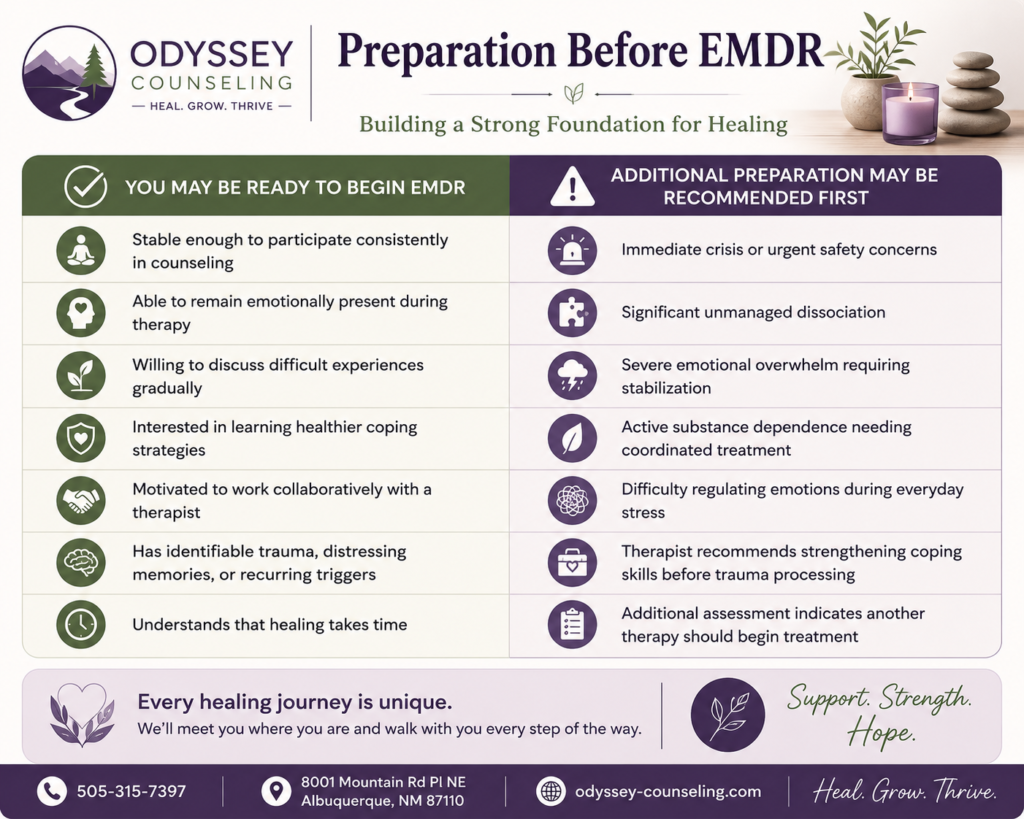
It is important to remember that the right side of this table does not represent permanent barriers to EMDR therapy.
For many people, these situations simply identify areas where additional support can improve safety, confidence, and long-term treatment success.
Healing is rarely a straight path. Sometimes the strongest foundation for successful EMDR begins with learning to feel safe, grounded, and emotionally supported before processing traumatic memories. By honoring each person's pace and individual needs, therapists help create the conditions for meaningful, lasting recovery rather than rushing toward quick solutions.
Frequently Asked Questions
Is EMDR therapy right for everyone?
No. Although EMDR is an evidence-based treatment that has helped many people recover from trauma, PTSD, anxiety, and distressing life experiences, it is not automatically the best starting point for everyone. A licensed mental health professional will evaluate your symptoms, personal history, emotional stability, coping skills, treatment goals, and readiness before recommending EMDR or another therapeutic approach.
Can EMDR help if I don't have PTSD?
Yes. While EMDR is widely recognized for treating PTSD, it may also be appropriate for individuals experiencing anxiety, grief, childhood trauma, panic symptoms, phobias, medical trauma, or other distressing life experiences. Treatment recommendations are always individualized following a comprehensive clinical assessment.
What if I can't remember every detail of my trauma?
You do not need to remember every detail for EMDR to be effective. Many people have incomplete or fragmented memories, especially following overwhelming experiences. During therapy, your counselor will help identify the memories, emotions, beliefs, or current triggers that may be contributing to your symptoms.
What if I become emotional during EMDR?
Feeling emotional during trauma therapy is not unusual. Your therapist will work at a pace that feels safe and manageable while teaching grounding techniques and coping skills to help you remain present throughout treatment. Therapy is designed to support healing—not overwhelm you.
Does needing preparation mean I can't have EMDR?
Not at all.
Many people benefit from first learning emotional regulation skills, strengthening coping strategies, or addressing immediate concerns before beginning trauma processing. This preparation often improves treatment outcomes and creates a stronger foundation for healing.
How long does EMDR therapy take?
The length of treatment varies depending on several factors, including your history, symptoms, goals, and the complexity of the experiences being addressed. Some individuals notice meaningful improvement after relatively few sessions, while others benefit from longer-term therapy. Your therapist will discuss realistic expectations during your assessment.
Will I have to relive my trauma?
No.
The goal of EMDR is not to repeatedly relive painful experiences. Instead, the therapy helps your brain process distressing memories in healthier ways so they become less emotionally overwhelming over time. Your therapist guides the process carefully and works to ensure treatment remains safe and manageable.
How do I know if I should schedule an EMDR consultation?
If distressing memories, trauma, anxiety, grief, or emotional triggers continue interfering with your daily life, relationships, work, or overall well-being, scheduling a professional evaluation can help determine whether EMDR or another evidence-based therapy may be appropriate for your situation.
Conclusion
Healing from trauma, anxiety, grief, or other overwhelming life experiences is rarely a simple journey, and there is no single treatment that works for everyone. The most effective therapy is the one that matches your unique experiences, current needs, and long-term goals.
EMDR has helped many individuals reduce the emotional impact of traumatic memories and move toward healthier, more fulfilling lives. However, the decision to begin EMDR should never be based on an online checklist or self-diagnosis alone. A comprehensive evaluation by a qualified mental health professional provides the safest and most reliable way to determine whether EMDR is appropriate or whether another therapeutic approach should come first.
One of the most important messages to remember is this:
Needing additional preparation before EMDR does not mean you have failed or that healing is out of reach.
For many people, building coping skills, emotional regulation, and a strong therapeutic relationship first becomes one of the most valuable parts of their recovery. Healing is not about rushing through difficult experiences—it's about moving forward at a pace that promotes lasting emotional wellness.
At Odyssey Counseling, every treatment recommendation begins with understanding the whole person rather than focusing on a diagnosis alone. Through individualized treatment planning, evidence-based therapies, compassionate care, and a commitment to long-term wellness, the team helps individuals throughout Albuquerque and Central New Mexico find hope, resilience, and meaningful healing.
Take the First Step Toward Healing with Odyssey Counseling
If you're wondering whether EMDR therapy is the right choice for you, you don't have to make that decision alone.
The compassionate team at Odyssey Counseling believes every person's healing journey is unique. During a confidential evaluation, an experienced therapist will take time to understand your history, current concerns, treatment goals, and personal strengths before recommending the therapy that best fits your needs.
Whether EMDR therapy becomes part of your treatment plan or another evidence-based approach is recommended, you'll receive personalized, client-centered care focused on helping you build resilience, improve emotional wellness, and move confidently toward lasting recovery.
Serving Albuquerque, Rio Rancho, Corrales, Placitas, Bernalillo, Los Ranchos, Los Lunas, Belen, Edgewood, Tijeras, and communities throughout Central New Mexico, Odyssey Counseling is committed to providing compassionate behavioral health services in a safe, supportive environment.
Contact Odyssey Counseling today to schedule a confidential consultation and begin your journey toward hope, healing, and emotional wellness.



 Listen In